
Home / Technology / Multi-Laser Technology for High-Capacity Production


Multi-laser technology for high-capacity production

When one laser source cannot deliver the required output, coverage or cycle time, the solution is not always a faster laser. In many cases, it is multiple lasers working together in one controlled system.

Multi-laser systems use several laser sources in a single machine. They can work in parallel on the same material or in sequence across different processing zones, increasing throughput, covering wider materials or reducing cycle time without sacrificing process accuracy.

Zenna Laser designs and builds multi-laser machines with up to five parallel lasers, engineered around the required output, material width and process quality of the application.


When multi-laser processing makes sense

A multi-laser system is not the default solution for every application. If one laser can meet the required output and quality level, Zenna Laser will design the machine around that.

Multi-laser processing becomes valuable when a single laser cannot meet the production requirement efficiently. This can apply to wide materials that need full-width processing in one pass, high-volume applications where cycle time is the bottleneck, or complex products where cutting, perforation, scoring or marking need to happen within the same machine cycle.

In these cases, multiple laser sources help increase capacity while keeping each process step within the right quality window.
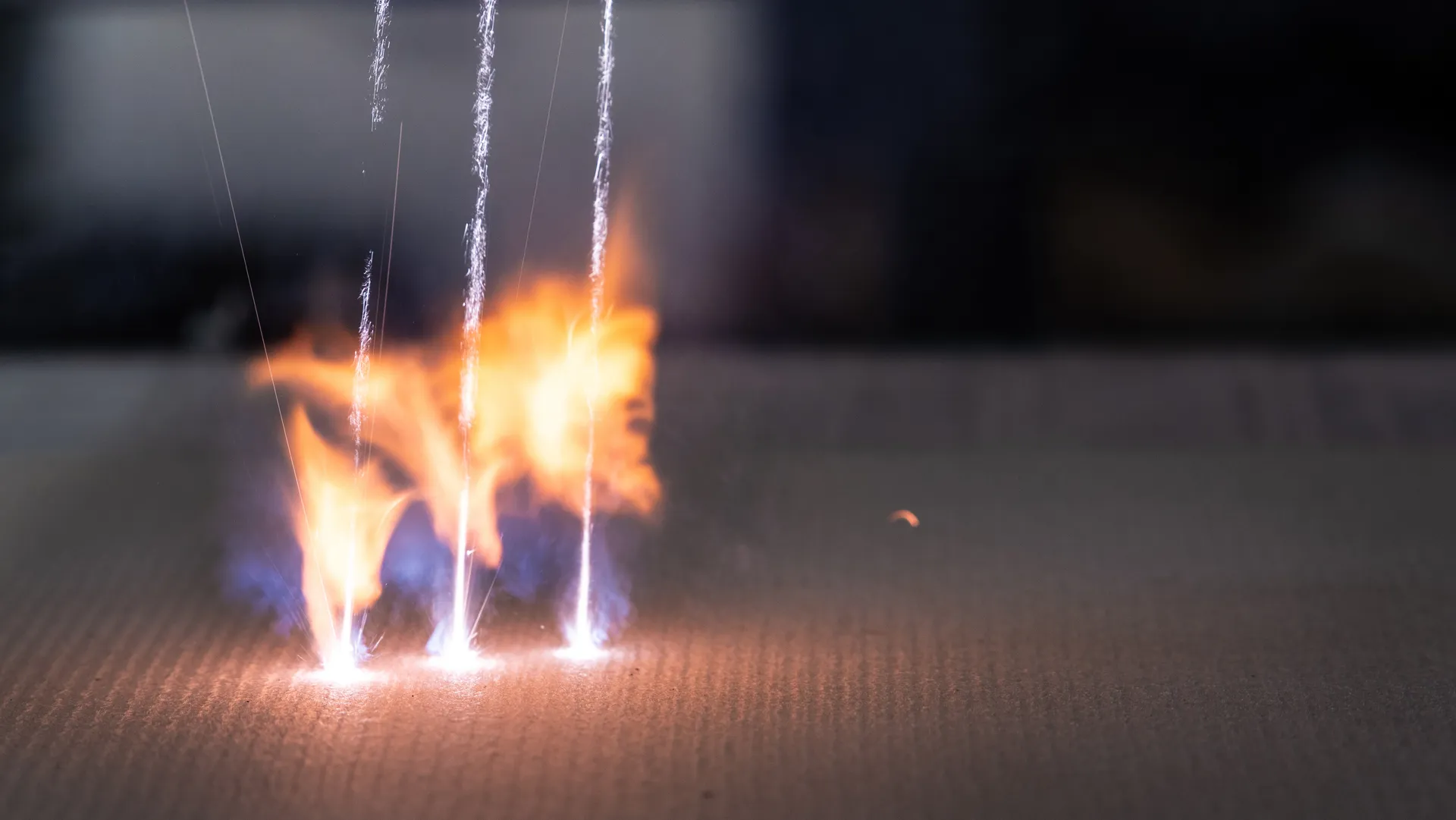

Increase output with multiple laser sources

When production volume exceeds what one laser can process reliably, simply increasing speed can affect process stability and cut quality. Multi-laser systems solve this by dividing the work across two, three, four or more laser sources operating at the same time.

Each laser processes its own zone, lane or set of parts within the optimal process window. This increases machine output without overloading a single laser and can help manufacturers expand capacity without adding a second standalone machine, operator position or full machine footprint.

Parallel processing for shorter cycle times

Parallel processing reduces cycle time by letting multiple lasers work at the same time. If one laser takes four seconds to complete a part, two lasers can process separate parts simultaneously without changing the laser settings.

This increases output while keeping quality stable, because each laser stays within the correct speed and energy range. For high-volume applications, adding an extra laser source can be more efficient than installing a second complete machine.


Multi-laser systems for cutting, marking and perforation

Multi-laser technology is not limited to cutting. The same approach can be used for marking, perforation, scoring or combined processes where different laser sources perform different tasks in one machine.

For wide-web marking, multiple scanner heads can be placed side by side to cover the full material width in a single pass. Each head marks its own lane, while the content is coordinated as one continuous result across the width. This allows Zenna Laser’s FullWidth Marker to cover material widths up to 2.6 metres.

In perforation applications, multiple laser sources can create hole patterns across wide or fast-moving materials at output rates a single source cannot reach. The final configuration depends on the production requirement, including the number of sources, laser type, power and arrangement needed for the application.


Synchronised control for consistent quality

Multiple laser sources only deliver their full value when they operate as one coordinated system. Zenna Laser machines use one control architecture to manage power, speed, pulse settings, path timing and material handling across all laser heads.

This keeps processing consistent across every zone of the material and helps prevent variation between the left and right side of a wide web, or from part to part in high-volume production. Feed speed, position feedback and trigger signals are shared across the full system, so each laser processes the right position at the right moment.

Balancing speed, accuracy and process stability

Higher output only matters when quality remains stable. Zenna Laser validates multi-laser systems at production speed, using the target material, output rate and all processing zones before delivery.

Each zone is tuned to meet the required specification, helping prevent edge variation, position errors or inconsistent marking between lanes. The goal is simple: single-laser quality at multi-laser capacity.


Integration with vision and material handling

A high-capacity multi-laser system only works when the full production flow can keep up. Material must be fed consistently, positioned accurately and handled after processing without creating a bottleneck.

Zenna Laser engineers vision and handling as part of the complete system. Vision-based position detection and automatic path correction help each laser process the right position, even when material shifts or varies across a roll. In-feed, tension control, web guiding, conveyors, winding systems and robotic handling are configured to match the throughput of the laser process, so the machine can deliver higher capacity reliably.



Explore whether multi-laser fits your production case

The starting point is always the production case: the material, required output rate, part geometry, process steps and quality specification. From there, it becomes clear whether one laser is sufficient or whether parallel processing is needed.

If you are evaluating options for a capacity increase, a new production line or a process that a single laser cannot cover, the most useful first step is a technical discussion.

Share your material, output target and process requirements with our engineers. Zenna Laser can assess whether multi-laser processing is justified, calculate the required configuration and help define the right machine concept for your production case.