Laser cleaning technology for industrial processes
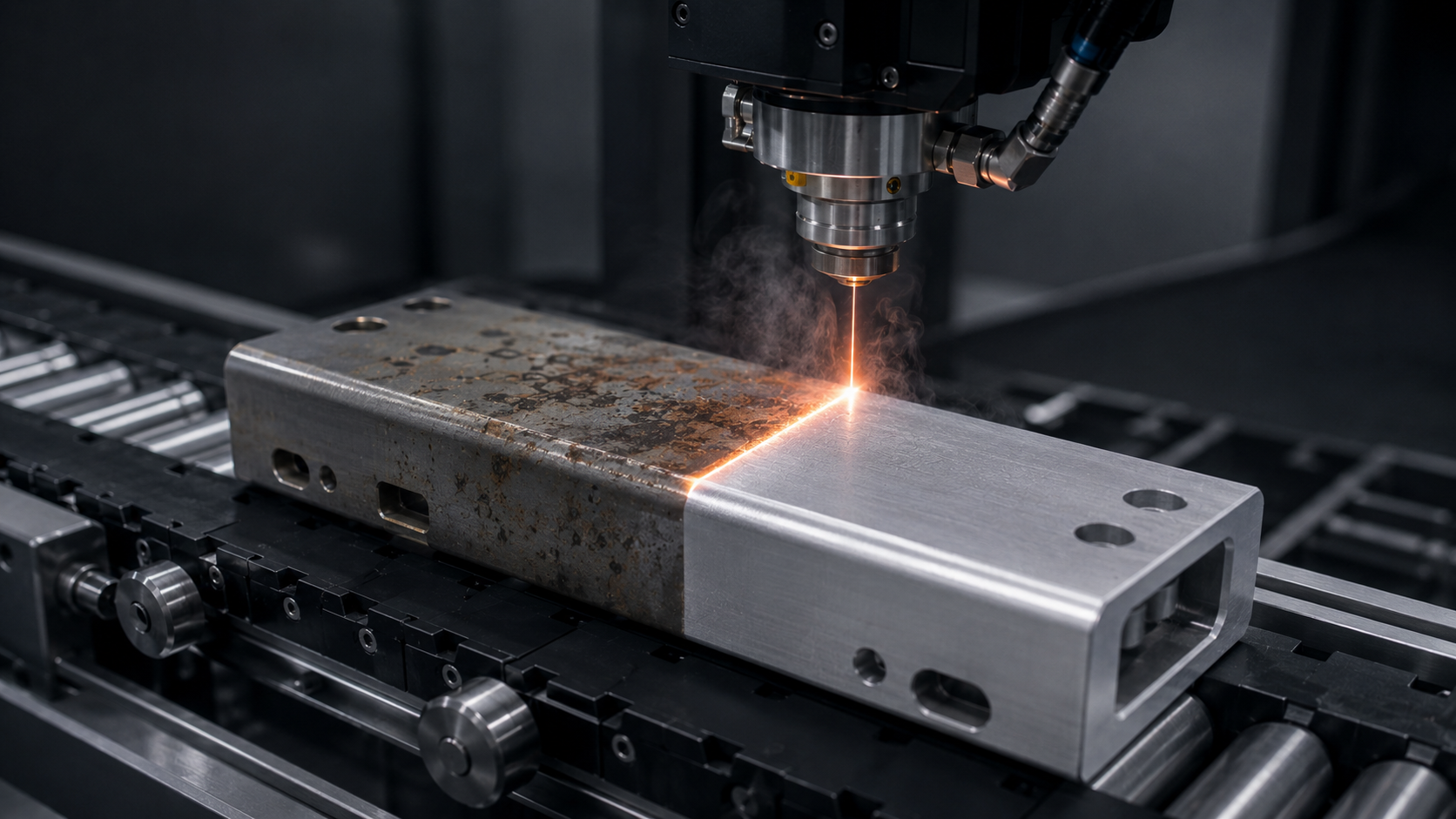
Laser cleaning can be used to remove contamination, oxidation, coatings, glue residues or surface layers without mechanical contact or chemical cleaning agents. This makes it valuable for processes where consistency, clean handling and integration into production are important.
Zenna Laser develops laser cleaning solutions for industrial production environments where surface treatment must be controlled, repeatable and easy to automate.
Each solution is designed around the material, surface condition, required cleaning result and production setup.
Contactless surface cleaning with controlled laser energy
Laser cleaning uses controlled laser energy to treat the surface of a material. The laser targets contamination, coatings or residues on the surface, while the process is tuned to the product and required cleaning result.
Because the process is contact-free, there is no tool pressing onto the material. This helps reduce mechanical wear, surface damage and process variation. Compared to processes such as sandblasting, laser cleaning offers a more controlled and repeatable result from the start of production to the end.
How laser cleaning works
During laser cleaning, the laser interacts with the upper surface layer or with the contamination on it. The unwanted layer is removed or modified without brushes, blasting media or chemical cleaning agents.
The process can be adjusted through laser power, speed, focus and movement. This gives engineers a controlled method for surface cleaning, surface preparation or selective material removal.
Controlled removal of contamination or surface layers
The right laser cleaning process depends on the material, surface layer and production goal. Energy input, processing speed and spot size must be matched carefully to the required result.
This makes it possible to remove only the unwanted layer, while keeping the base material intact. The result is a stable and repeatable cleaning process with more control over surface quality.
When laser cleaning becomes interesting
Grinding and sandblasting are common conventional surface cleaning methods, but they can create wear, waste, downtime or variation in quality. Laser cleaning becomes especially interesting when the cleaning process needs to be more controlled, automated or applied to specific areas of the product.
For manufacturers, this can mean fewer consumables, less manual work and a cleaner production process. For engineers, it offers more control over the final surface condition.
Benefits compared to traditional cleaning methods
Mechanical, chemical and abrasive cleaning methods often depend on consumables, manual handling or tools that wear over time. They can also create waste streams or require extra cleaning steps before the next production stage.
Laser cleaning is a dry, contact-free process. It reduces the need for chemicals or blasting media and can be controlled through software. This supports consistent quality, easier automation and cleaner integration into industrial production.
The result is a sustainable and environmentally friendly cleaning process with less dependency on consumables and fewer process variables to control.