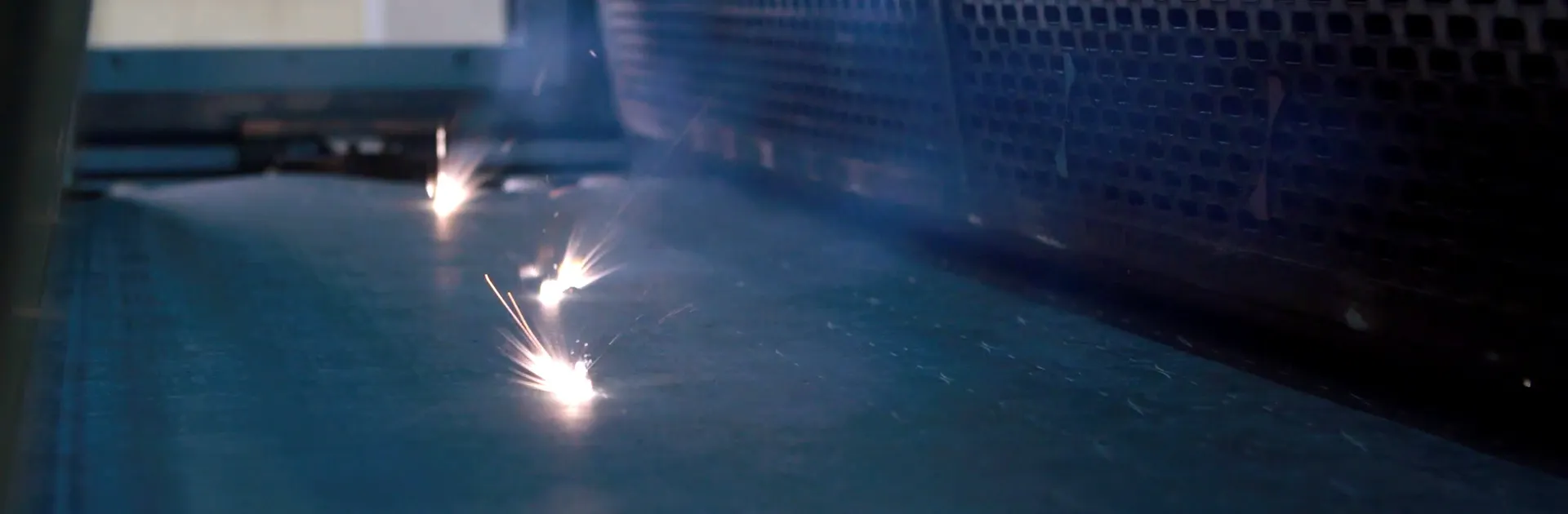
Die cutting and laser cutting are both widely used in manufacturing industries such as abrasives, deburring brushes, and hard fiber materials. Both methods can produce high-quality parts, but they work in very different ways.
Die cutting is a traditional method that performs well in long, repetitive production runs. Laser cutting is more flexible and better suited to product variation, digital control, and automated production. That makes the choice less about which method is better overall, and more about which method fits the production process best.
What is die cutting?
Die cutting uses a physical tool to stamp or cut a shape from the material. Once the die is made and installed, it can run quickly and consistently for large volumes of the same product.
That makes die cutting a strong option for manufacturers working with fixed designs and long production runs.
What changes with laser cutting?
Laser cutting uses a digitally controlled laser beam instead of a physical die. Because there is no tooling needed for every shape, manufacturers can switch between designs much more easily.
This makes laser cutting especially useful for shorter runs, product variation, and more complex shapes or patterns.
The main difference: tooling versus flexibility
The biggest difference is in the production logic.
- Die cutting works best when one product is repeated in high volumes
- Laser cutting works best when flexibility and fast changeovers matter, and when cutting hard fiber and / or multiholes patterns
That also affects cost. Die cutting often starts with a lower machine investment, but new designs require new tooling. Laser cutting usually costs more upfront, but removes much of that tooling dependency.
Automation and future-proof production
This is where laser cutting becomes especially interesting.
Laser systems can be integrated with:
- Robotics
- Vision systems
- Automated handling
- Digital quality control
That allows manufacturers to automate more than just the cut itself. Material positioning, product recognition, inspection, and handling can all become part of one connected production flow.
This fits closely with the type of solutions Zenna develops, where robots, vision, and laser technology work together in one automated system. In that kind of setup, the value of laser cutting is not only in flexibility, but also in how easily it supports a smarter and more scalable production process.
Die cutting remains reliable, but it is generally less adaptable in highly automated environments where fast switching and digital control are becoming more important.
So which method is the better choice?
That depends on the demands of the production process. For manufacturers that want more flexibility, less reliance on tooling, and a production setup that is easier to automate, laser cutting is often the stronger choice.
Choose laser cutting when:
- Cutting Abrasives, especially in case of Fiber, Multiholes or special products
- Products vary more often,
- Tooling dependency needs to be reduced
- Precision and flexibility are important
- Automation is part of the production strategy
For many modern manufacturers, laser cutting offers more than just a different way of cutting. It creates a more flexible and future-ready production process that can adapt more easily to changing market demands.
Final thoughts
Die cutting and laser cutting both have value, but they support different ways of producing.
Die cutting remains strong in stable, high-volume production. Laser cutting is better suited to manufacturers that need more flexibility, less tooling dependency, and easier integration with automation.
As production demands continue to change, the decision is no longer only about cutting speed. It is also about how well the process supports efficiency, variation, and future growth.
FAQ
What is the main difference between laser cutting and die cutting?
Die cutting uses a physical tool, while laser cutting uses a digitally controlled laser beam. The main difference is that die cutting depends on tooling, while laser cutting offers more flexibility.
Why is laser cutting more suitable for automation?
Because it can be integrated more easily with robotics, vision systems, and automated handling.